How to Make Old Comic Book Wear on Art
These days, well-nigh any comic creator with talent and a strong vision can reach an audition. And with some luck, their creations might fifty-fifty bring together the ranks of the indie comics with screen adaptations (recall I Impale Giants, Polar, and The End of the F****** World). In other words, there's no better fourth dimension than today to be an indie comic creator.
If you have a passion for telling great graphic stories, here's how to make your own comic book in five steps:
- 1. Focus your ideas into a hook that pops
- 2. Cull the format your story needs (or the one it deserves)
- 3. Draft a punchy script, not a novel with pictures
- 4. Squad up or go solo for the artwork
- 5. Driblet Effect #i like it's hot
1. Focus your ideas into a claw that pops
While you may already have loads of compelling ideas, characters, and settings, it's wise to await ahead and see how you lot can capture interest with your comic book. Unless yous already accept a reputation that can describe in a boatload of readers ("The new series from the creator of Ultimate Spider-Man"), you'll want to take a not bad 'hook' that fans volition find irresistible. 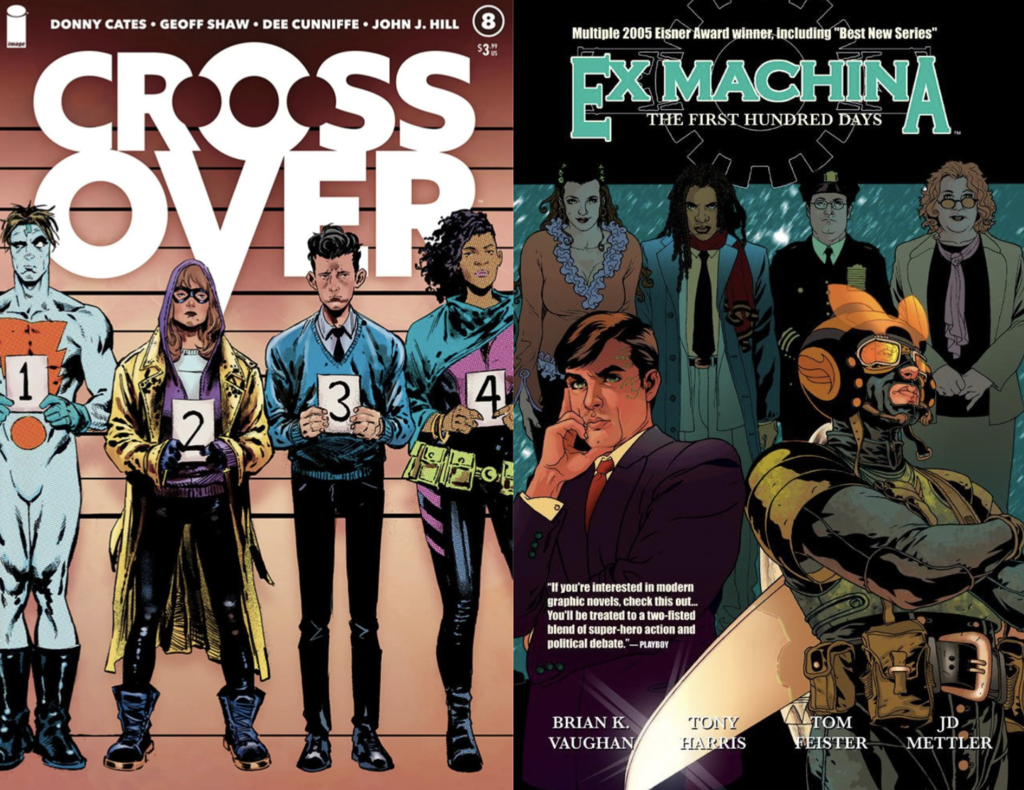 A claw is a line that you use to describe your concept to help people immediately understand what's special virtually your story. Here are some examples of fantastic hooks:
Ex Machina by Brian K Vaughan and Tony Harris — Iron Human being meets The West Wing: The world's but superhero becomes the mayor of New York City.
Bedlamite of New York by Elliott Kalan and Andrea Mutti — Jaws, but with a series killer instead of a shark.
Crossover by Donny Cates, Geoff Shaw, Dee Cunniffe and John J. Colina — A rupture in reality sees every fictional comic book grapheme dropped directly onto existent-world Denver, throwing the globe into disarray.
The Individual Middle by Brian K Vaughan and Marcos Martín — A near-future globe where the Cloud "bursting" has led to normal people becoming intensely guarded over their personal lives — even wearing masks day-do-day and bold false identities to continue their secrets condom.
By establishing your "claw" before yous delve into writing and inking your comic, you will remain light amplification by stimulated emission of radiation-focused on what gives your story an edge.
2. Cull the format your story needs (or the 1 it deserves)
How you cull to publish your book will affect how yous write and illustrate it, and so make sure you choice the right format. (We'll talk more than near how to publish your comic volume in the adjacent post of this guide).
Print comics
Whether you're hoping to sell your comic to a publisher or go the indie route and publish it on your ain, there are a few formatting issues to deport in mind.
Go along it nether thirty-twoscore pages. Comic issues are usually 32-pages long, but the stories tend to be around 22 page, to allow for ads and 'letters from the editor'. If you're going in the indie route, and then you tin can be a lot more than flexible, though keep in mind that printers will charge you by the page!
Blackness and white isn't all bad. Color is hard to get right in comic fine art. This is why y'all'll oft see first-time comic creators working on books that lend themselves to the monochrome aesthetic, equally going black and white tin exist both easier and cheaper to produce. (PS — You lot can always come up back and add together color later, like Fantasy Sports author Sam Bosma, whose indie B&W comic was picked upwards by a publisher and reimagined in color).
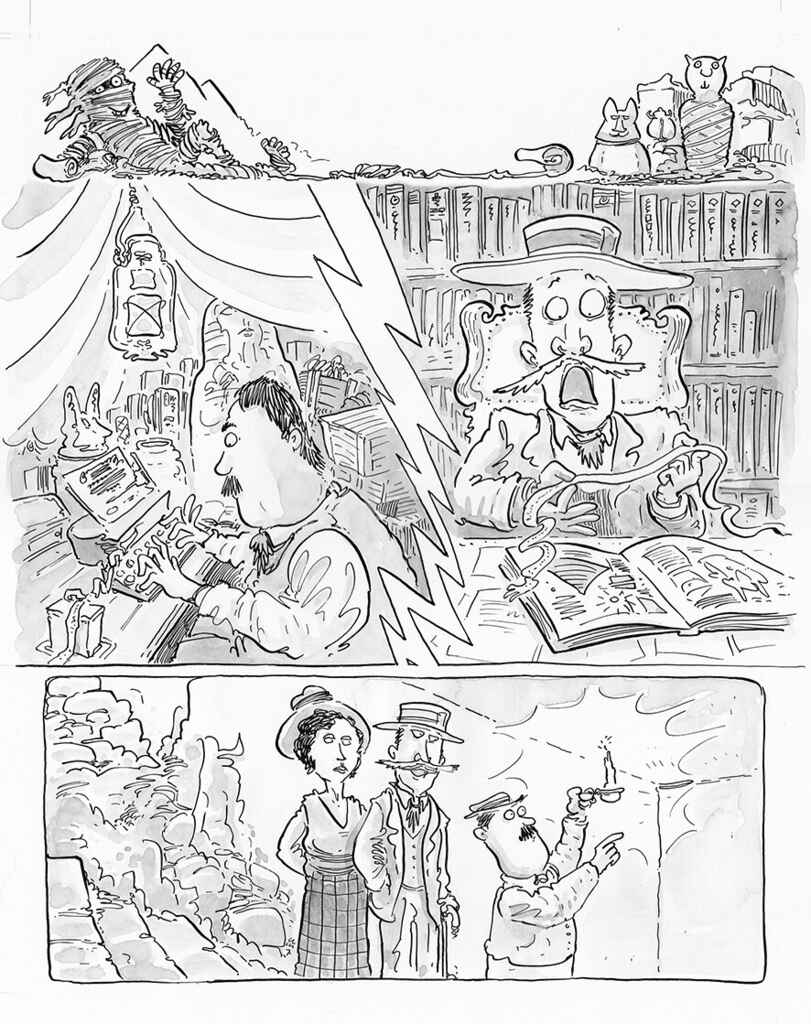
Don't go too wild with your trim sizes. The trim size of mod comic books is 6.625 inches x ten.25 inches (or thereabouts). Most of the shelves in a comic store are for books this size, as are the clear plastic comic protectors that collectors use. Unless you have a truly revolutionary reason for printing a nine" x 9" title, you can save yourself a lot of hassle by sticking with a standard size.
Digital comics
If you're planning to write an ebook comic, then y'all'll obviously have a lot more than liberty with how you format your artwork 一 which is why ever more artists are going down this route.
Most digital devices like phones, tablets, and computers aren't ideal for reading comics in the traditional 9-panel filigree. When it comes to handling curt wide panels and double-page spreads, they can exist even worse. However, with 'guided view' — a slideshow-style mode you tin can set on Comixology using Amazon'due south comic creator — y'all can make it a fairly reasonable experience on many digital devices.
Then when writing a traditionally-formatted comic for the digital market, consider keeping things unproblematic — if only for the sake of your readers' eyesight.
Webcomics

Services like Webtoon and Tapas host comics that are designed to be read on the phone, where the images are sequenced vertically. All the reader has to exercise is swipe upwardly to see the next panel. Currently, these platforms mostly cater to fans of manhwa (an originally Korean mode of comic which is aesthetically similar to manga) — but you lot tin can expect these outlets to diversify as time goes past.
Blogs, Tumblr, Instagram
Some artists cull to cut out the middleman and share their artwork straight with their social media followers. One example of an author doing this is The Eyes past Javi de Castro, a comic hosted entirely on the author's blog. Even published comic book artists utilise their socials to share small comics, like Thomas Wellman's Carmilla comics which he shares to Instagram.
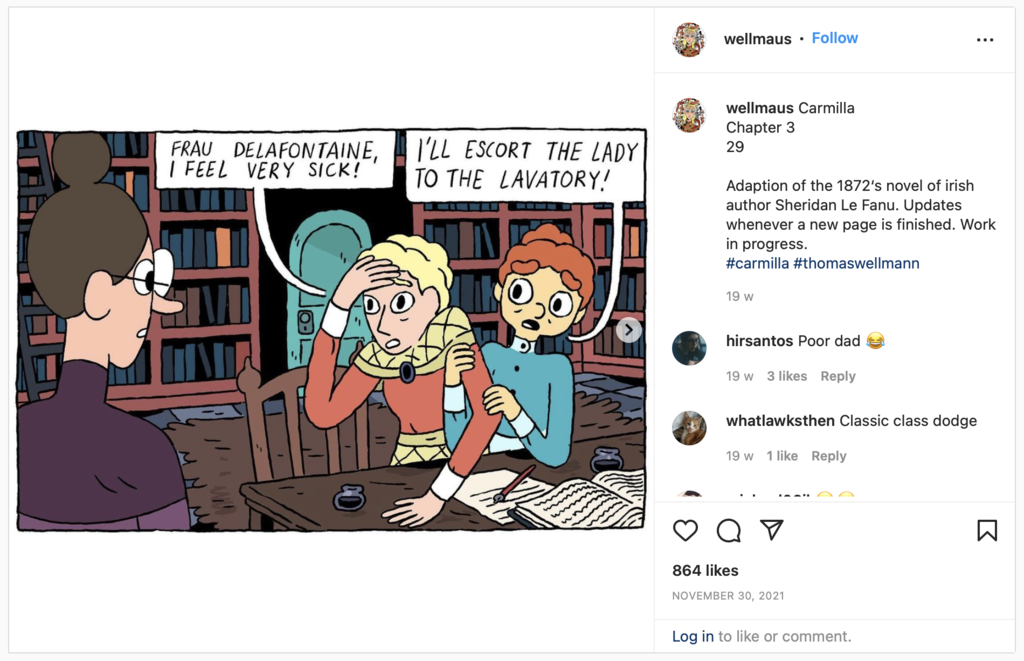
The great part about this is that you have total artistic control; provided your artwork is appropriately formatted for your platform of selection, you can create and share information technology instantly.
If you lot want more than information on unlike formats for comic books and how to publish them, you can check out the other part of our guide here.
3. Draft a punchy script, not a novel with pictures
Comics are, above all, a visual medium and most comic scripts reverberate this. They are blueprints written for an audience of 1: the illustrator. As a issue, the script must convey the writer's vision in a way that facilitates collaboration.
Plot style scripts
In almost author-artist partnerships, the illustrator volition take an incredible corporeality of input in the final product. If this were a movie, the creative person would be the director, cinematographer production designer, and casting director — and the writer is, unsurprisingly, the writer.
In these situations, it's best for the writer to draw the activity of the scene along with the dialogue — and get out it to the illustrator to bring that scene to life notwithstanding they experience all-time to do it.
In plot-style scripts, the writer volition draw the action of the scene in the nowadays tense. They might present dialogue in quote marks, or in the style of a screenplay.This style of scripting is sometimes referred to as a "Marvel script" due to its longtime use past the publisher of Spider-Human and X-Men.
Total script
Oftentimes, a writer volition want more influence over how the story visually develops across the page. If this is the case, you may want to take a console-past-panel (or 'full script') approach.
When working panel-by-console, be specific: let your artist know your ideal console size, and how you visualize the "shot" — like you would to a cinematographer. Alan Moore'due south scripts are a cracking case of just how granular you lot can be when writing this style.
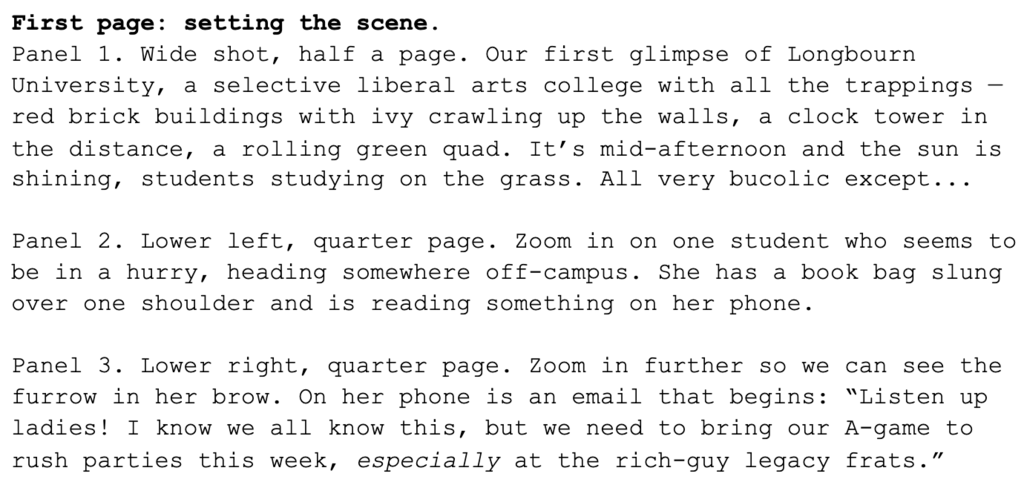
Virtually contemporary writers go with the panel-by-panel script, which is best if you have a clear, specific vision for your comic book. Still, if you're flexible on the details and would like some room to improvise, then the page-past-page option might be better.
Tailor your script to your artist'southward needs
If you're collaborating with an creative person on making your comic book, you may need to tweak the style y'all've scripted to make certain they have everything they demand. It's good to bring an creative person on board as early as possible (which we'll discuss more in the next section) then that you can keep them in mind while scripting.
Since some artists may request more or less detail in your scripting, it's important to concord on how much artistic control your artist should take, or if they're willing to follow more than granular instructions. Generally, virtually artists will be happy to brand artistic decisions when illustrating, just don't be agape to get specific and make requests while collaborating!
Fifty-fifty if you're your own artist, information technology is a good idea to take at least a folio-by-page outline before you start drawing, and so yous tin refer back to it and you're never left wondering what'due south supposed to happen next.
While there are a few different ways you could script your comic book, here are some hard and fast rules you should try and stick to:
Cut the small-scale talk
Above all, comic books are a visual medium, so try and keep dialogue short and sweetness. Retrieve when Twitter merely immune 140 characters per Tweet? Co-ordinate to comic volume editor Rachel Gluckstern, this is also a good limit for each line of comic dialogue — and try to keep it to ten-12 total lines per page, captions, and speech bubbles included.
Pace your action
You lot're working with withal images, and what's happening on each page needs to be understandable from a few frames alone. Any more than 2 or three distinct actions per page (say, a character climbing the stairs, opening a door, and locking it backside them) is likewise "decorated" to testify on a single page, and can really throw off the pacing of your comic.
Don't forget that page count
As nosotros mentioned, you can get longer or shorter, but 30-forty pages is most the expected length of a comic book, and a realistic scope for a first-fourth dimension writer — and of course, you can always create additional installments to your beginning issue.
These technical considerations can exist a fiddling overwhelming, merely don't forget that you can e'er consult a professional to brand sure your script is production-ready. At Reedsy, we piece of work with the all-time editors in the industry, who can advise on technical requirements and assistance you create the right script to realize your vision.

Looking for an editor for your comic book?
Sign upward to meet astonishing editors for hire on Reedsy.
Learn how Reedsy can assist you lot craft a beautiful volume.
4. Team upwardly or go solo for the artwork
It's the moment you lot've been waiting for: bringing your comic book to life with illustrations! If you're not an creative person yourself, this is where yous'll desire to phone call in a pro. If you lot don't know where to notice them, y'all could commencement with the brilliant comic book illustrators correct here on Reedsy. Sign up for free to look through their portfolios and discover the perfect mode for your comic.
If you're collaborating, squad up early
Oftentimes, the way to get the near out of your comic book collaboration is to bring an illustrator onboard nice and early. By sharing your visions and getting on the aforementioned page, you'll have the all-time chance of producing a comic book you're both happy with, and with minimal friction.
Starting early on will also give you lot the time to find an illustrator who really works with you. Don't rush into choosing your creative person, and have time to review whatsoever potential illustrator'due south previous work, and see whether their style is the ane yous want for your work.
Start with a storyboard
Whether you're creating your own art or collaborating with an illustrator, this office should brainstorm with storyboarding: sketching out your panels to get a rough thought of how they'll look and "menstruation" together on the page.
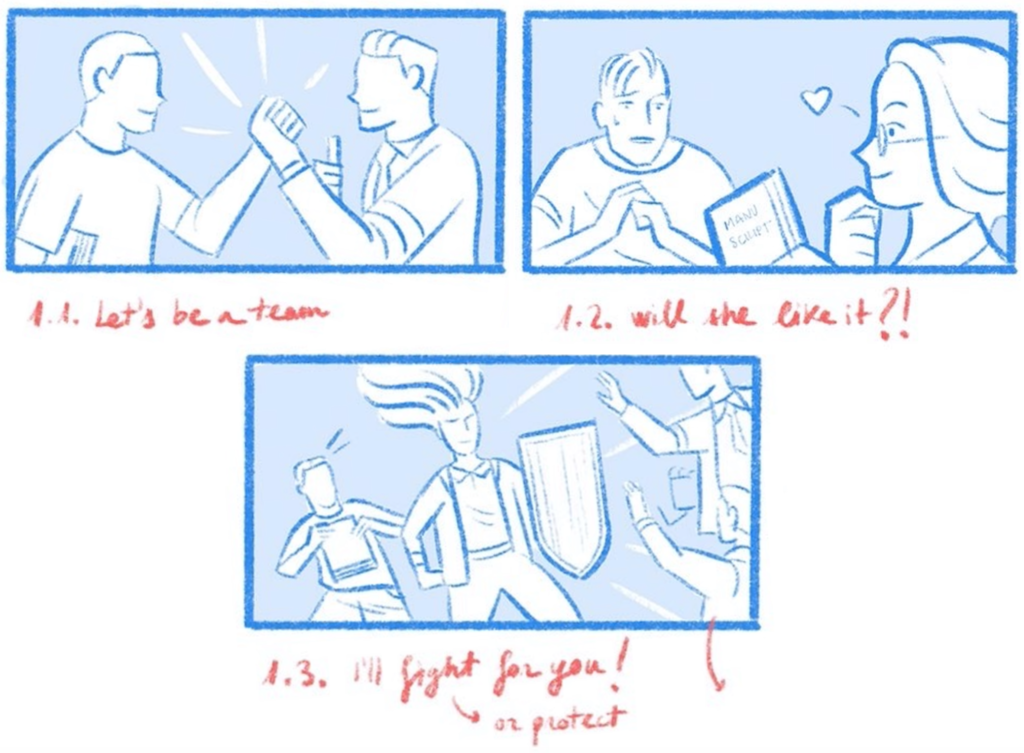
You may have done a lilliputian storyboarding in the writing stage, just it's good to sketch out your entire comic book earlier you keep. Even if yous've gone for a panel-by-panel script, storyboarding ofttimes reveals ways yous can improve it — altering the pacing, adding or deleting captions, fifty-fifty transplanting entire panels that would work better elsewhere.
If yous're working with an illustrator, having them storyboard offset ensures the ii of you lot are on the aforementioned folio. Though there may be a few kinks to fe out, it will be worth it to know that your illustrator 100% understands your vision.
If y'all're illustrating your comic solo, you should notwithstanding consider storyboarding. A "rough draft" of your visuals will assist you spot annihilation yous may have misjudged while scripting, like too many dizzying POV shifts or awkward scene transitions. As tempting as it might exist to just become started on the real deal, it's meliorate to sketch things out earlier sinking also much fourth dimension into panels that may never go used.
You can lay out your panels the adept quondam-fashioned mode on a corkboard or whiteboard, or apply storyboarding software like Storyboarder or Canva.
Whether you're storyboarding yourself or have professional help, accept your time with this, and don't motility on to full illustrations until you lot're happy with your storyboard. You'll still demand to adjust pocket-sized things for the final product, simply storyboarding should prevent mid-production disasters, potentially saving you a lot of time and money.
Time to illustrate
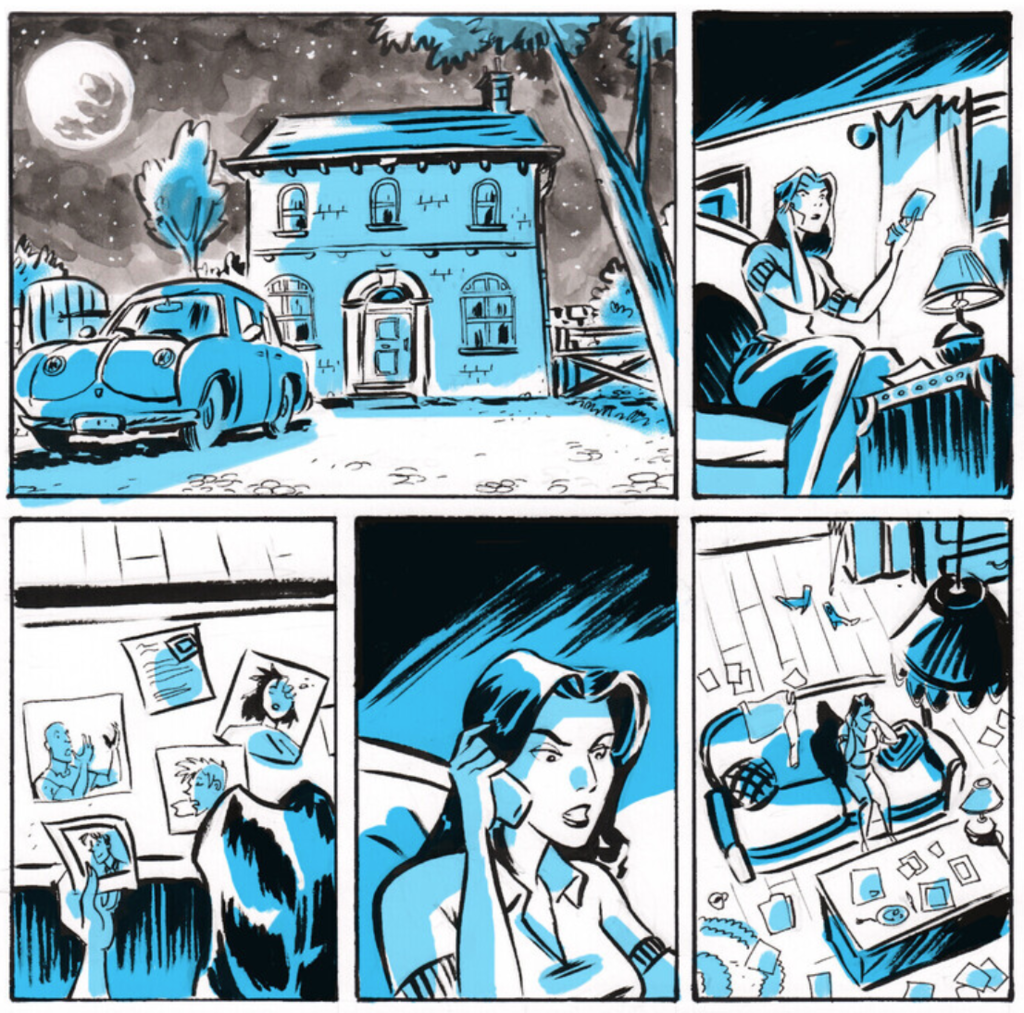
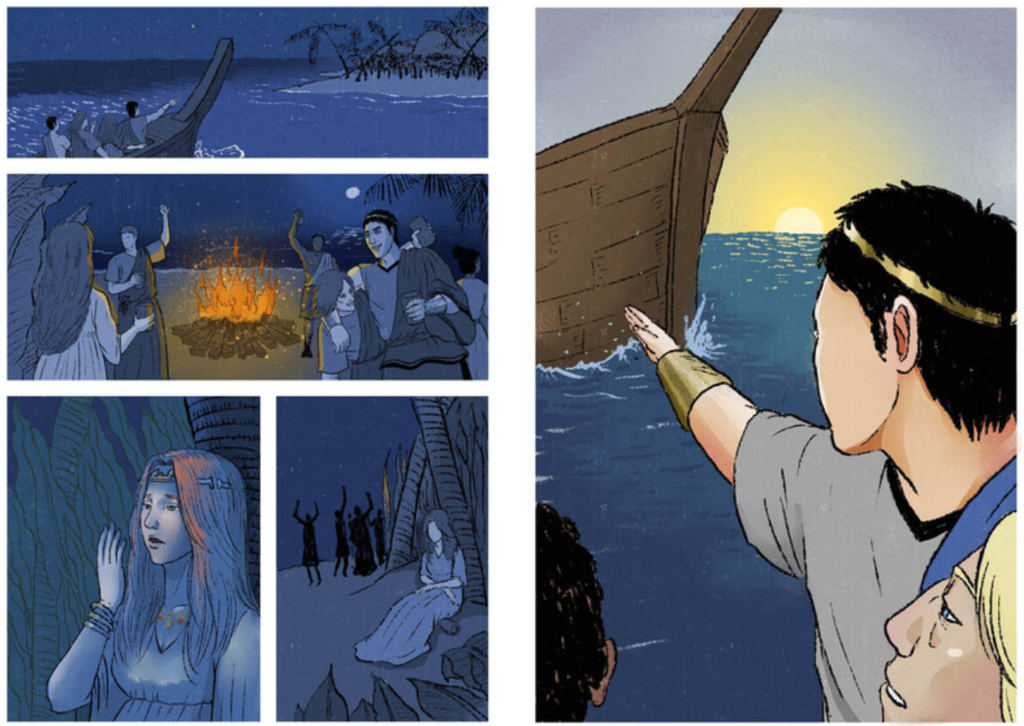
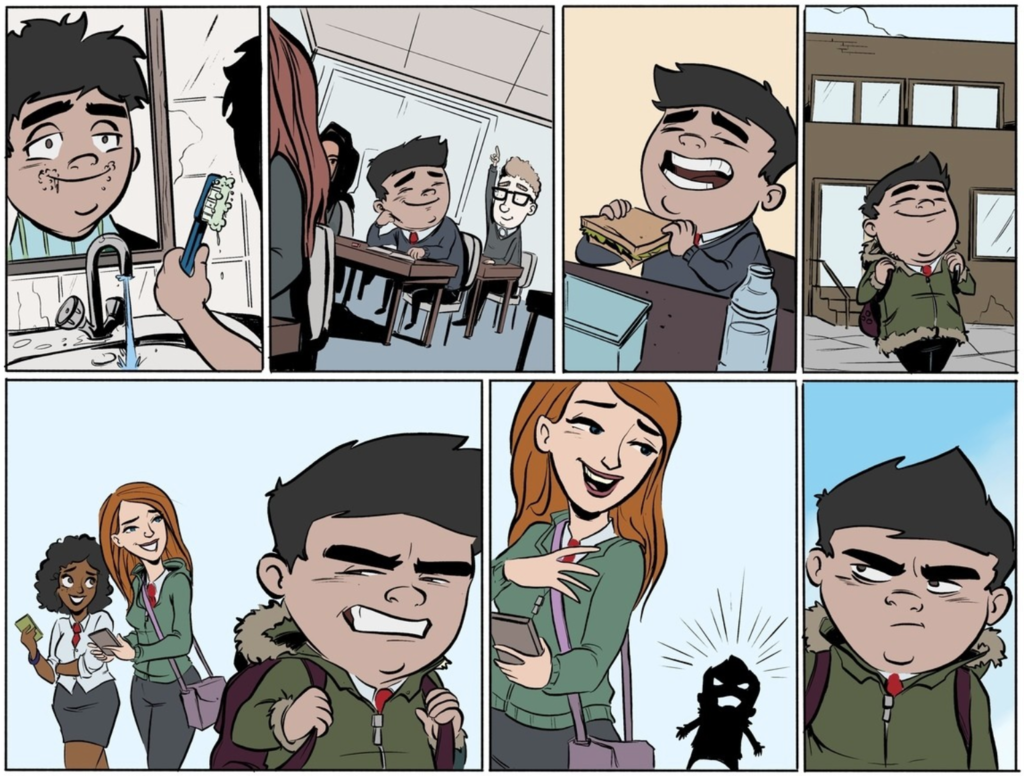
If you're collaborating with a pro, and so it's time to hand over your files and let them practice their thing! Be prepared to give some feedback on various iterations of the comic; your artist might want to consult you lot on sure decisions during the process, and ask you to give effective feedback before yous reach your final product.
To run into what a professionally drawn comic should await like at this stage, bank check out these examples from our illustrators:
Need an artist for your comic book?
Sign up to meet 50+ amazing comic book artists for rent on Reedsy.
Larn how Reedsy tin can assist you craft a beautiful book.
If you're illustrating solo, and then at that place are other things to continue in mind. You'll want to establish a "business firm style" before yous get started, including an idea of your colour palette, and some character concept art, to make sure you attain continuity throughout your work. Y'all may notice your ideas change over the class of illustrating, so be prepared to go back and make revisions.
You may think that adding text is the final step in your illustration process, but hold up! Earlier creating your illustrations, y'all'll want to consider how much infinite your text will take upwards. Even if you oasis't decided on your last font nevertheless, you should brand sure yous outline a space that each console's text can sit in comfortably, and and then use the remaining space to draw.
Next will come up penciling and then inking your images, followed by adding in any color. Finalizing lettering will be the terminal step in the process, which we'll hash out in the next step.
If you're going analog and illustrating using pen and paper, make certain yous take access to a loftier-resolution scanner to digitize your artwork. If you want to go digital from the start, do your research and pick out a software that can support your needs (for case, a lot of pros swear by Prune Studio Paint Pro, but you'll desire to see what else is out there before committing).
Perhaps invest in an experienced letterer
Comic book lettering is a distinct art form of its own, and is very important in creating a polished final product. Conventionally, your lettering should be capitalized, and framed by balloons or boxes. There are some other conventions that are used to convey emotion, or equally a shorthand for readers, which a professional letterer will be well versed in, so hiring ane is well worth the investment.
If you've hired an experienced comic book illustrator, they may also be able to assist with lettering. If not, you take a couple more options: you tin can research fonts and lettering software to attempt it yourself, or you lot can hire a typographer who specializes in comic book lettering.
Lettering is a skillful investment, as working with a pro on a custom font is the best way to create the perfect typeface for your piece of work, and 1 that you tin can then go on to apply forever.
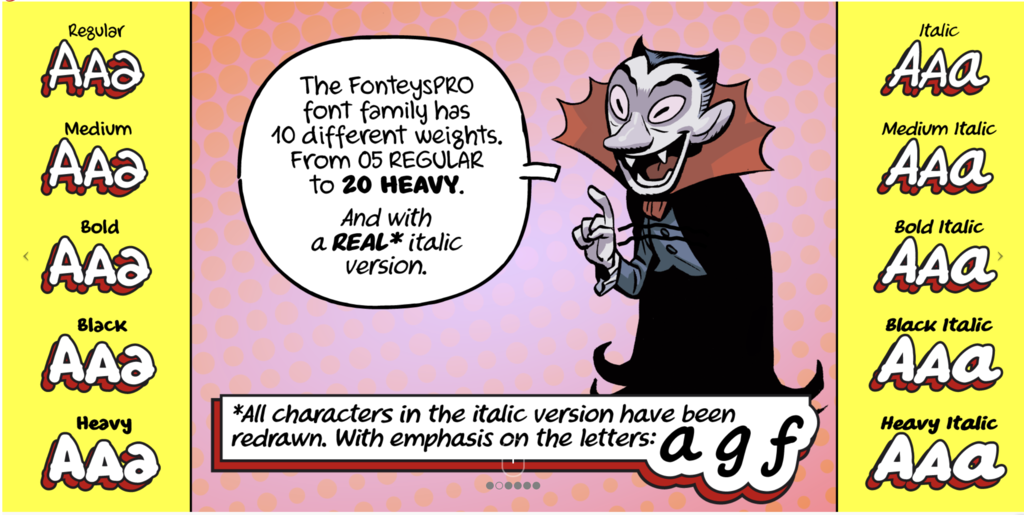
Create your perfect cover paradigm
As much as the old maxim suggests otherwise, people really do judge a book by its encompass — and especially a comic book. You may desire to interact with the aforementioned artist who created your interior design to make your comprehend, to ensure readers have a practiced thought of what they tin can expect from the art style.
Having said this, some writers and publishers work with dissimilar artists to create their covers, so this isn't exterior of the realm of possibility. Some illustrators specialize in covers, because they understand the artistic "language" of creating a commercial comprehend. Using a second illustrator for embrace art is peculiarly common in the US market place, although less so in Europe or Japan.
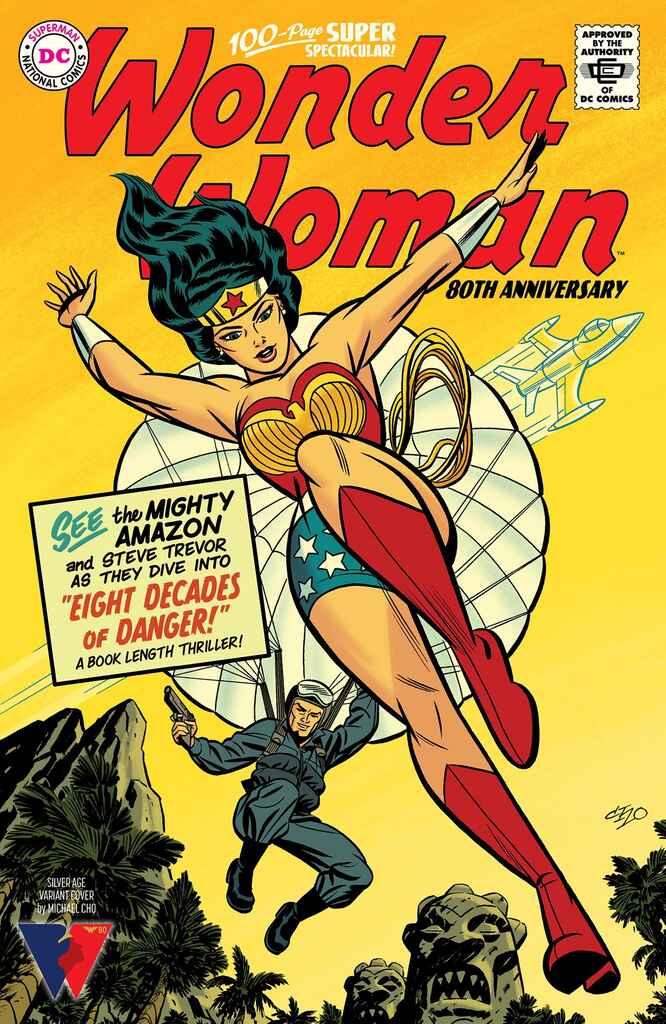
Either way, yous'll want to brand your comprehend epitome attention-grabbing and representative of the tone of your work, and mark your championship and issue number clearly so readers know what they're looking at.
Comic book, gather!
At present you've got all your elements, it'south time to pull them together, and get together your comic volume. Arrange your final panels into their concluding menstruation, and requite everything a final review. Is the flow from panel to panel intuitive? Does the eye get drawn to the right places? Is the action comprehensible? If the answer to whatsoever of these is no, you'll want to become back and make revisions until you're completely satisfied.
five. Drop Event #i similar it's hot
Congrats, you've made your comic book! Subsequently you've assembled everything and finalized the artwork, it's time to go publishing. We have a whole post on this, which also covers how to print and market your comic volume, simply here are some quick tips.
One of the best things about comic books is that when yous find 1 you dearest, yous can await forrad to future installments of the story. Start with simply your showtime issue, and comprise feedback from readers into the residue of your run. If there'due south an unexpected fan favorite that people desire to run across more of, or a common critique, y'all tin use that information to shape the residue of your series.
Don't let also much time pass in-betwixt issues, though — you'll desire to be timely with your releases and so that your story doesn't lose momentum. Between editions, proceed your fans engaged using social media, and share teasers from upcoming installments to go on your work fresh in readers' minds.
For more tips on publishing your comic book, check out the adjacent section of our guide to learn how to bring your creation to the masses!
Source: https://blog.reedsy.com/guide/how-to-make-a-comic-book/
0 Response to "How to Make Old Comic Book Wear on Art"
Post a Comment